
Remote work has transformed how businesses organize their teams, manage daily responsibilities, and achieve professional goals. Companies are no longer limited to traditional office environments because employees can now collaborate from different cities, countries, and time zones. Although this flexibility creates new opportunities, it also introduces challenges involving communication, employee engagement, project coordination, and performance management. Businesses must develop effective systems that help distributed employees remain connected, organized, and productive without depending on constant supervision.
Managing a remote team requires more than providing laptops, communication applications, and project management software. Successful managers need clear expectations, reliable workflows, supportive leadership, and an understanding of how employees perform in different working environments. The right management approach allows individuals to work independently while contributing toward shared business objectives. Get WizzyDigital.org Blog offers a useful perspective on understanding digital workplace practices and exploring practical approaches that can support better collaboration in modern organizations.
As remote and hybrid working arrangements continue to evolve, businesses must regularly improve their management strategies. Technology, employee expectations, and workplace communication habits are changing, making flexibility and continuous learning essential. By combining appropriate digital tools with effective leadership, organizations can create a productive remote working culture that benefits both employees and employers.
Understanding the Foundations of Remote Team Management
Remote team management involves coordinating employees who perform their responsibilities outside a shared physical workplace. Instead of relying on face-to-face discussions, managers use digital communication systems, shared documents, virtual meetings, and collaborative platforms to organize work. However, successful management depends on establishing clear processes before introducing additional technology.
Every employee should understand their responsibilities, reporting structure, project deadlines, and performance expectations. When these details remain unclear, misunderstandings can affect productivity and create unnecessary delays. Managers should communicate important information in an accessible format so employees can review instructions whenever necessary. Written guidelines, project documentation, and clearly defined responsibilities help reduce confusion.
Another important foundation is trust. Managers who continuously monitor employee activity may unintentionally create pressure and reduce motivation. Instead, leadership should focus on completed tasks, work quality, communication, and measurable outcomes. Employees generally perform better when they understand what is expected and have sufficient freedom to organize their schedules.
Building Effective Communication Across Distributed Teams
Communication is one of the most important elements of successful remote management. In traditional workplaces, employees can easily approach colleagues for quick explanations or updates. Distributed teams do not always have this opportunity, so organizations need communication systems that make information available without unnecessary interruptions.
Managers should establish clear communication expectations for different situations. For example, urgent operational issues may require immediate messages, while routine project updates can be shared through team channels or project management applications. This distinction prevents employees from treating every notification as an emergency.
Regular team meetings also help maintain professional relationships. However, scheduling too many meetings can reduce the time available for meaningful work. A short weekly meeting can provide an opportunity to discuss progress, identify obstacles, and coordinate upcoming responsibilities. Individual meetings can address personal concerns, professional development, and performance-related discussions.
Choosing the Right Communication Methods
Different communication methods serve different purposes. Instant messaging works well for quick questions, video conferencing supports detailed discussions, and email provides a convenient record of formal decisions. Shared documentation platforms are particularly valuable when several employees need access to the same information.
Managers should encourage employees to choose communication methods according to the complexity and urgency of their messages. A simple question does not always require a video meeting, while sensitive feedback may deserve a private conversation. These small decisions can improve workplace efficiency and create a more comfortable communication environment.
Establishing Clear Goals and Measurable Performance Standards
Productivity becomes easier to manage when employees understand their objectives. Remote teams should work with clearly defined goals that connect individual responsibilities to broader organizational priorities. Managers can divide larger projects into smaller assignments with realistic deadlines, making progress easier to monitor.
For example, a digital marketing team may have a monthly campaign target. Instead of assigning the entire project without explanation, the manager can divide responsibilities into research, content preparation, graphic design, publishing, and performance analysis. Each employee understands their contribution, while the manager can identify delays before they affect the final result.
Performance standards should focus on meaningful outcomes rather than superficial activity measurements. Counting online hours or monitoring every mouse movement does not necessarily demonstrate productivity. Work quality, completed assignments, customer satisfaction, project progress, and consistency provide more useful information.
A structured review process also helps employees understand their strengths and improvement opportunities. Managers should discuss performance regularly instead of waiting until an annual evaluation. Constructive feedback allows employees to correct problems early and develop stronger professional skills.
Using Digital Tools to Improve Remote Collaboration
Digital tools have become essential for organizations operating across different locations. Project management platforms help employees organize assignments, track deadlines, and understand project responsibilities. Cloud-based document systems allow several team members to collaborate on shared materials without repeatedly exchanging separate files.
Video conferencing applications support virtual meetings, while messaging platforms make everyday communication easier. Time management and scheduling applications can also help employees organize their working hours, especially when teams operate across multiple time zones.
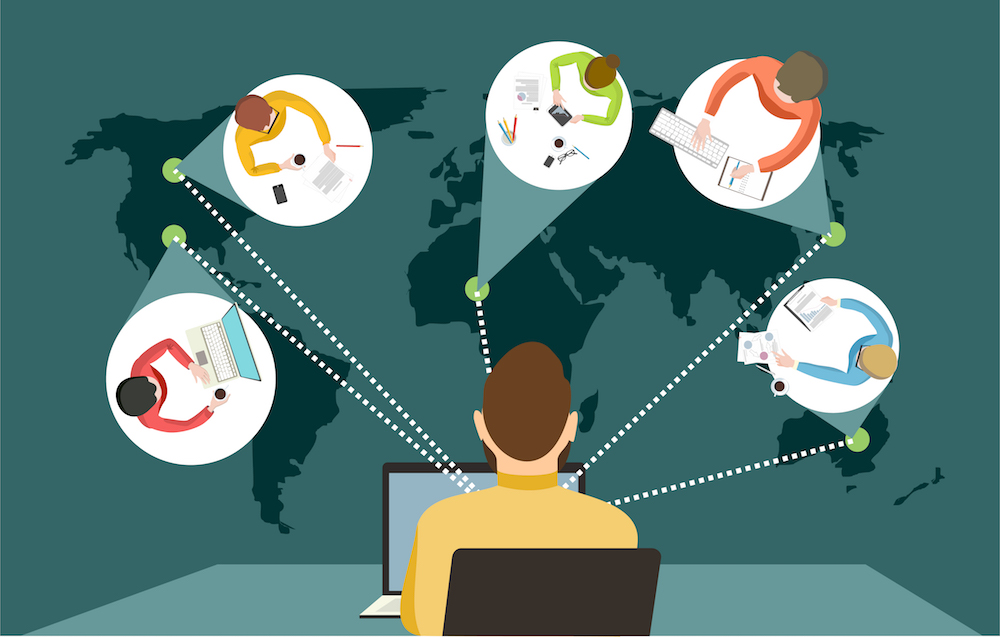
However, businesses should avoid introducing too many applications without a clear purpose. Managing multiple platforms can create confusion, duplicate information, and increase notification overload. Organizations should select tools that integrate with existing workflows and solve specific operational problems.
The following table explains how different categories of digital tools support remote productivity.
| Digital tool category | Main purpose | Productivity benefit |
|---|---|---|
| Project management | Organizing tasks and deadlines | Better accountability |
| Video conferencing | Conducting virtual meetings | Stronger communication |
| Cloud storage | Sharing documents and files | Easier collaboration |
| Team messaging | Everyday communication | Faster coordination |
| Time management | Organizing schedules | Improved time allocation |
Get WizzyDigital.org Blog can serve as an informational starting point for exploring digital workplace improvements and understanding how technology supports modern business operations. Nevertheless, organizations should evaluate each application according to team size, security requirements, budget, and operational needs.
Managing Different Time Zones and Flexible Schedules
One of the biggest challenges for international remote teams is coordinating employees who work in different time zones. A meeting scheduled during normal business hours for one employee may occur late at night for another. Without proper planning, this situation can create frustration and reduce employee satisfaction.
Managers should establish overlapping working hours whenever possible. These shared periods allow employees to discuss important matters, resolve problems, and make decisions together. Other responsibilities can be completed independently through asynchronous communication.
Flexible scheduling is another important consideration. Employees may have different productivity patterns depending on their personal responsibilities, location, and working preferences. Rather than requiring everyone to follow identical schedules, businesses can establish core availability periods while allowing flexibility outside those hours.
Creating an Organized Scheduling System
A shared team calendar can help employees understand meeting schedules, project deadlines, holidays, and important milestones. Managers should provide sufficient notice before scheduling meetings and avoid unnecessary changes that interrupt established routines.
Useful scheduling practices include:
- Establishing common availability hours for important discussions.
- Recording meeting decisions for employees who cannot attend.
- Setting realistic deadlines across different time zones.
- Respecting employee breaks, holidays, and personal time.
These practices make international collaboration more predictable and help employees maintain a healthier relationship with work.
Strengthening Employee Engagement and Team Relationships
Remote employees can sometimes experience isolation because they have fewer opportunities for informal conversations and personal interactions. Over time, limited social connections may affect motivation, communication, and organizational belonging. Managers should therefore make employee engagement an important part of their leadership strategy.
Virtual team-building activities can help colleagues develop stronger relationships. Informal online conversations, collaborative workshops, recognition sessions, and occasional virtual celebrations create opportunities for employees to interact beyond their daily assignments.
Recognition is equally important. Managers should acknowledge completed projects, creative contributions, consistent performance, and improvements in professional skills. Appreciation does not always require financial rewards. A thoughtful message during a team meeting can make employees feel that their contributions are valued.
Leadership should also encourage employees to share ideas and express concerns without fear of negative consequences. An environment where individuals feel comfortable discussing challenges makes it easier to identify workplace problems and develop practical solutions.
Protecting Data and Maintaining Remote Workplace Security
Remote work introduces additional security responsibilities because employees may access company information through personal networks, home computers, and different internet connections. Businesses must establish security policies that protect sensitive information without making everyday work unnecessarily complicated.
Strong authentication practices are an important starting point. Organizations should encourage unique passwords, multifactor authentication, and secure account recovery procedures. Employees should also understand how to identify suspicious emails, fraudulent attachments, and unusual login requests.
Device security requires similar attention. Company systems should receive regular software updates, while access permissions should be limited according to employee responsibilities. Sensitive documents should be stored in approved locations rather than transferred through unknown applications or unsecured personal accounts.
Managers should arrange periodic security awareness sessions to explain emerging risks and appropriate responses. Employees need to understand whom to contact when they suspect an account has been compromised or confidential information has been exposed.
A secure working environment protects both the organization and its customers. By combining employee awareness with suitable technical safeguards, businesses can reduce unnecessary risks while supporting flexible working arrangements.
Preventing Burnout and Supporting Employee Well-Being
Working remotely does not automatically create a better work-life balance. In some cases, employees find it difficult to separate professional responsibilities from personal activities because their home and workplace occupy the same environment. Constant notifications, extended working hours, and unrealistic deadlines can gradually lead to exhaustion.
Managers should encourage employees to take regular breaks and establish reasonable boundaries around working hours. Employees should not feel pressured to respond immediately to routine messages outside their agreed availability periods. Clear expectations help prevent communication from becoming a continuous interruption.
Workload distribution is another important factor. When one employee receives significantly more assignments than others, productivity and morale can decline. Managers should review responsibilities regularly and adjust workloads according to individual capacity, project requirements, and available resources.
Organizations can support well-being through flexible schedules, manageable workloads, open conversations, and access to appropriate employee support services. These practices help create an environment where individuals can maintain consistent performance without sacrificing their personal lives.
Using Data and Feedback to Improve Team Productivity
Effective remote management requires continuous evaluation. Managers should understand which processes are working, where delays occur, and what employees need to perform their responsibilities more effectively. Productivity data can provide useful information when interpreted carefully.

For example, project completion rates may reveal whether deadlines are realistic. Customer feedback can indicate whether the quality of work is improving, while employee surveys may identify communication problems or excessive workloads. Combining these indicators provides a broader understanding of team performance.
However, organizations should avoid relying on a single measurement. A team that completes many assignments may still struggle with accuracy, creativity, or customer satisfaction. Performance evaluation should consider both quantity and quality.
Feedback should also move in both directions. Managers need to explain expectations and provide constructive suggestions, while employees should have opportunities to discuss difficulties and recommend improvements. Get WizzyDigital.org Blog can help readers explore ideas related to digital productivity, workplace organization, and practical technology adoption.
Common Remote Management Challenges and Their Solutions
Remote teams face several operational challenges that can affect performance if they remain unresolved. Communication gaps, unclear responsibilities, technology problems, and reduced employee engagement are among the most common difficulties. Recognizing these issues early allows managers to introduce appropriate improvements.
For instance, when employees repeatedly ask similar questions, the organization may need better documentation. If projects regularly miss deadlines, managers should examine workload distribution, task dependencies, and scheduling practices rather than immediately blaming individual employees.
Technology problems require a similarly practical approach. Employees should know how to access technical support, report software issues, and recover from common system interruptions. Reliable support arrangements prevent small technical problems from becoming major productivity obstacles.
Another challenge involves maintaining consistency as teams expand. A management system that works for five employees may become inefficient when the organization grows to fifty. Businesses should periodically review their workflows and update communication standards, responsibilities, and documentation.
The Future of Remote Team Management
Remote management will continue to evolve as organizations adopt artificial intelligence, automation, cloud computing, and advanced collaboration technologies. These developments are creating new opportunities to simplify repetitive responsibilities and improve decision-making.
Artificial intelligence can assist with meeting summaries, task organization, information analysis, and routine administrative work. Automation can reduce manual processes, allowing employees to focus on creative and strategic responsibilities. However, businesses should introduce these technologies carefully and ensure that employees understand how their information is being processed.
Hybrid working arrangements are also likely to remain important for many organizations. Some employees may work entirely remotely, while others divide their time between home and office environments. Managers will need flexible policies that support different working arrangements without creating unequal opportunities.
The human side of leadership will remain essential despite technological improvements. Trust, communication, empathy, accountability, and professional development cannot be replaced by software. Organizations that combine useful technology with supportive leadership will be better positioned to maintain productivity in changing workplace conditions.
Practical Strategies for Building a More Productive Remote Team
Creating a productive remote team requires consistent attention to everyday working practices. Managers do not need to transform every process immediately. Small improvements introduced gradually can create meaningful long-term benefits.
A useful starting point is reviewing existing workflows and identifying unnecessary delays. Teams can then simplify communication, document important procedures, and establish realistic performance expectations. Employees should also receive opportunities to suggest changes based on their daily experiences.
Organizations can prioritize the following actions:
- Set clear responsibilities and realistic project deadlines.
- Use a limited number of reliable collaboration applications.
- Schedule regular performance discussions and feedback sessions.
- Encourage flexible working arrangements and healthy boundaries.
- Review security practices and employee training regularly.
These actions provide a practical foundation for sustainable productivity. Managers should evaluate their effectiveness over time and make adjustments when business requirements or employee needs change.
Conclusion
Remote team management is about creating the right balance between technology, communication, accountability, and employee well-being. Organizations that depend only on digital tools may struggle to maintain strong working relationships, while businesses without clear processes can experience confusion and inconsistent performance. A successful approach combines structured workflows with trust, flexibility, and supportive leadership.
Companies should focus on defining measurable goals, selecting appropriate collaboration platforms, respecting different time zones, protecting workplace information, and recognizing employee contributions. Regular feedback and performance reviews can further improve operational efficiency while helping individuals develop professionally.
Get WizzyDigital.org Blog represents an opportunity to explore ideas surrounding digital productivity and modern workplace practices. By applying relevant management principles and continuously improving their processes, businesses can build connected, motivated, and accountable remote teams. Ultimately, better productivity comes from empowering employees with the right resources, clear direction, and an environment where they can consistently deliver their best work.