

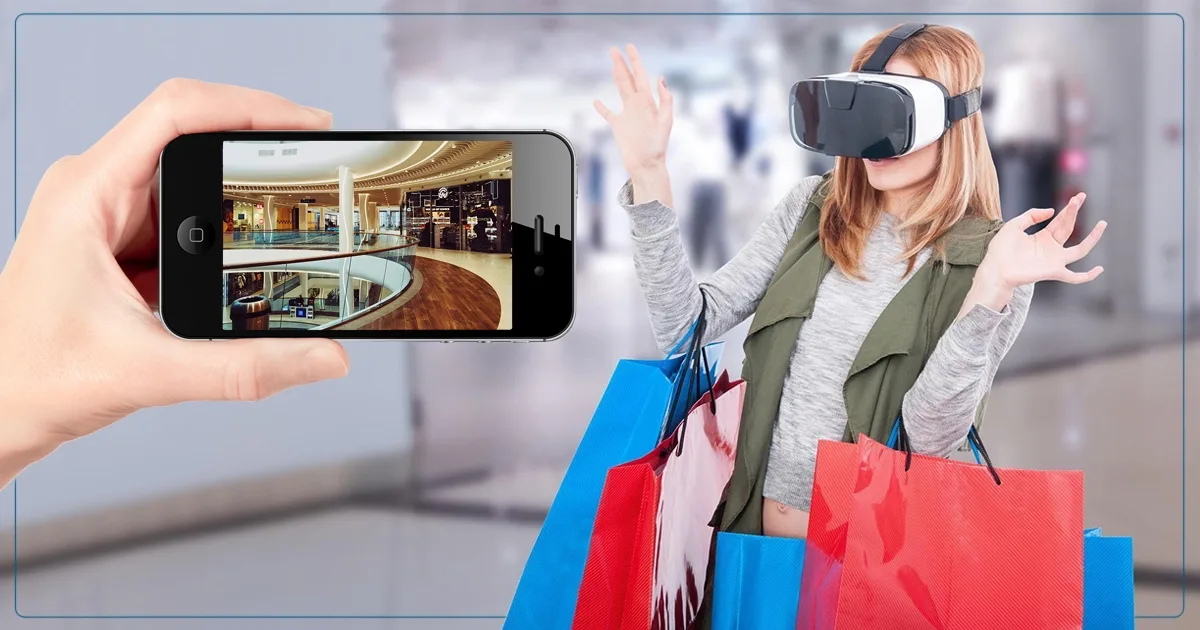
The retail industry is experiencing a significant transformation as customers increasingly expect convenient, interactive, and personalized shopping experiences. Traditional shopping methods are no longer sufficient for every consumer, particularly as online shopping continues to influence purchasing decisions. People want to understand how products look, fit, and function before spending their money. Augmented reality (AR) is helping retailers meet these expectations by connecting digital information with real-world environments. Through smartphones, tablets, and compatible devices, shoppers can explore products virtually without needing to visit a physical store.
Augmented reality allows customers to visualize furniture inside their homes, experiment with cosmetic products, try virtual clothing accessories, and examine product details through interactive digital elements. These capabilities reduce uncertainty and make online shopping more engaging. Retail brands are also discovering that immersive experiences can improve customer confidence, encourage product exploration, and create stronger relationships with their audiences. Get WizzyDigital.org Blog offers an opportunity to explore how digital developments, emerging technologies, and practical marketing strategies can support retailers interested in adopting modern shopping solutions.
As competition increases across online marketplaces and physical retail stores, businesses must identify meaningful ways to differentiate their customer experiences. AR is becoming an important part of this process because it combines entertainment, convenience, and useful product information. However, successful implementation requires more than introducing an attractive digital feature. Retailers must understand customer expectations, select appropriate technologies, and ensure that interactive experiences provide genuine value.
Understanding Augmented Reality in Modern Retail
Augmented reality is a technology that adds computer-generated elements to a person’s view of the physical environment. Unlike virtual reality, which creates an entirely digital environment, AR enhances the surroundings that users can already see. Customers generally access these experiences through smartphone cameras, dedicated applications, or compatible web browsers. This makes the technology relatively accessible because many shoppers already own devices capable of supporting basic AR features.
In retail environments, AR can help customers understand products before making purchasing decisions. For example, someone considering a new sofa can use a mobile application to place a digital representation of the furniture inside a living room. The shopper can examine its approximate dimensions, compare different colors, and determine whether the design matches the existing interior. Similarly, beauty brands can offer virtual makeup applications that allow customers to experiment with different shades without physically applying products. These experiences make product discovery more practical while reducing the uncertainty associated with online purchases.
Another important advantage is the ability to provide additional information through interactive visual elements. Customers may scan packaging to discover product specifications, watch demonstrations, or explore instructions. Retailers can use these features to communicate information in a more memorable format than conventional product descriptions. When implemented carefully, AR transforms shopping from a passive browsing activity into an interactive experience that encourages informed decisions.
Why Retail Brands Are Investing in AR Shopping Experiences
Retail businesses are investing in augmented reality because consumer expectations are changing. Modern shoppers frequently move between physical stores, mobile applications, social media platforms, and e-commerce websites before completing a purchase. They expect consistent product information and convenient experiences across these channels. AR helps retailers connect digital and physical shopping environments while offering customers additional ways to evaluate products.
Customer confidence is one of the biggest reasons behind this investment. Online shoppers cannot physically touch or examine products before purchasing them. Product photographs may communicate appearance, but they cannot always demonstrate scale, texture, or suitability. AR addresses some of these limitations by allowing customers to visualize products in realistic contexts. A customer purchasing a decorative lamp, for example, can examine how its design might complement a particular room before placing an order.
Businesses also recognize the marketing opportunities associated with immersive shopping. Interactive experiences can attract attention, encourage customers to spend more time exploring product collections, and create memorable brand interactions. Get WizzyDigital.org Blog can help readers understand how these digital marketing developments connect with broader retail strategies and changing customer behavior.
Major Applications of AR Technology in Retail
Virtual Try-On Experiences for Fashion and Beauty
Virtual try-on technology is among the most recognizable applications of augmented reality in retail. Fashion brands can use digital fitting experiences to help customers visualize accessories, eyewear, footwear, and selected clothing products. Beauty retailers can provide virtual tools that simulate lipstick shades, foundation colors, and other cosmetic products using a smartphone camera.
These features make product exploration more convenient, particularly for customers who prefer shopping online. Someone purchasing sunglasses can compare several frame styles without physically visiting a store. Similarly, a customer exploring lipstick colors can test different appearances within seconds. Although virtual try-ons cannot perfectly reproduce every physical characteristic, they offer useful visual guidance that supports purchasing decisions.
Furniture and Home Decoration Visualization
Furniture and home improvement retailers can use AR to demonstrate how products may look inside customers’ living spaces. Shoppers can position digital furniture models within a room and evaluate different arrangements before making a purchase. This is particularly helpful when buying large or expensive products because dimensions, colors, and overall appearance influence purchasing decisions.
For example, a family considering a dining table can use an AR application to understand whether a particular design suits the available space. They can compare different finishes and visualize alternative arrangements without moving physical furniture. Retailers can also use these tools to introduce related products, such as chairs, lighting, and decorative accessories.
Interactive Product Demonstrations
Some products require more explanation than a photograph or short description can provide. Electronics, home appliances, fitness equipment, and technical accessories often have features that customers want to understand before purchasing. AR demonstrations can present interactive models, animated instructions, and product components in a visually understandable format.
Customers might explore the internal features of an appliance, understand how a device operates, or examine the placement of different components. These experiences can reduce confusion and help shoppers identify products that match their requirements.
AR Experiences Inside Physical Stores
Augmented reality is not limited to e-commerce platforms. Physical retailers can integrate AR into their stores through interactive displays, mobile applications, and product scanning features. Customers can point their devices toward selected products to discover additional information, compare specifications, or access personalized recommendations.
This approach can make store visits more engaging while helping customers find information independently. It can also support employees by providing additional product details during customer interactions.
How AR Improves the Customer Shopping Journey
The customer shopping journey generally includes awareness, research, product comparison, purchasing, and post-purchase engagement. Augmented reality can contribute to several of these stages by providing useful visual information and interactive experiences.
During the awareness stage, immersive advertisements and social media filters can introduce products in creative ways. During research, customers can use virtual demonstrations to understand product features. Product comparison becomes easier when shoppers can visualize different colors, styles, or configurations. At the purchasing stage, realistic previews can help reduce uncertainty and encourage customers to complete their transactions.

After purchasing, AR can continue providing value through installation guidance, product maintenance instructions, and interactive support. For instance, a customer purchasing a home appliance might scan a product label to access a visual setup guide. This reduces dependence on lengthy printed instructions and makes the ownership experience more convenient.
Get WizzyDigital.org Blog provides a useful perspective for understanding how retailers can connect these customer touchpoints through digital innovation. Rather than treating AR as an isolated marketing feature, businesses should consider how it can support the complete relationship between customers and their products.
Key Benefits of AR Shopping for Retail Brands
Augmented reality offers several business advantages when its implementation is aligned with customer needs. The technology can improve product understanding, strengthen brand engagement, and support more informed purchasing decisions.
Some important benefits include:
-
Better product visualization: Customers can examine products in realistic environments before purchasing.
-
Improved customer engagement: Interactive features encourage shoppers to explore products more actively.
-
Greater purchasing confidence: Visual demonstrations help reduce uncertainty during online shopping.
-
Personalized experiences: Customers can experiment with different styles, colors, and product configurations.
-
Stronger brand differentiation: Immersive shopping features can help retailers create memorable experiences.
However, these benefits are not automatic. The quality of product models, application performance, interface design, and customer accessibility all influence the final experience. Retailers should evaluate whether an AR feature solves a genuine shopping problem rather than introducing technology simply because it is becoming popular.
Comparing Traditional Shopping With AR Shopping
Traditional shopping and augmented reality shopping both provide useful experiences, but they approach product discovery differently. Physical stores allow customers to touch products and evaluate their actual appearance, while conventional e-commerce depends heavily on photographs, videos, and written descriptions. AR introduces another layer by allowing customers to interact with digital representations of products in their surroundings.
| Shopping factor | Traditional shopping | AR shopping |
|---|---|---|
| Product visualization | Physical product inspection | Interactive digital previews |
| Convenience | Often requires store visits | Accessible through compatible devices |
| Product comparison | Manual comparison | Digital comparison of multiple options |
| Personalization | Depends on available assistance | Supports customized visual experiences |
| Product information | Labels and employee guidance | Interactive digital information |
| Customer engagement | Physical demonstrations | Immersive digital interactions |
AR should not necessarily replace traditional shopping. Instead, retailers can combine physical product experiences with digital visualization to provide customers with greater flexibility. Some shoppers prefer examining products in person, while others appreciate the convenience of virtual previews. An effective retail strategy recognizes these different preferences.
Technology Requirements for Successful AR Implementation
Choosing the Right AR Platform
The first step in implementing AR is selecting a platform that matches the retailer’s business model. Some businesses may benefit from browser-based AR experiences, while others might require dedicated mobile applications. Web-based solutions can reduce the need for customers to download additional software, making product exploration more convenient.
Retailers should evaluate device compatibility, loading performance, development costs, and available features before selecting a platform. A solution that works smoothly across different smartphones is generally more practical than one that requires expensive or specialized equipment.
Creating Accurate Three-Dimensional Product Models
High-quality 3D models are essential for convincing AR experiences. If a digital product representation has inaccurate proportions, unrealistic colors, or incomplete details, customers may develop incorrect expectations. Retailers should invest in accurate product scanning, modeling, and testing processes.
Product models should also be optimized for mobile performance. Extremely large digital files may increase loading times and make applications difficult to use. Balancing visual quality with technical efficiency is therefore important.
Protecting Customer Data and Privacy
Many AR applications use smartphone cameras, location information, or other device permissions to provide interactive features. Retailers must explain why specific permissions are required and how collected information will be handled. Camera access should be limited to the functions necessary for the shopping experience.
Clear privacy policies, secure data storage, and responsible information management help establish customer trust. Businesses should also avoid collecting unnecessary personal information simply because their applications provide opportunities to do so.
Challenges Retailers Must Consider Before Adopting AR
Although augmented reality offers promising opportunities, implementation involves practical challenges. Development costs can be significant, particularly for businesses that need custom applications, extensive 3D product libraries, and ongoing technical support. Smaller retailers may find it difficult to invest in sophisticated AR systems without a clear understanding of potential returns.
Device compatibility is another concern. Not every smartphone provides the same performance, and customers may experience differences in camera quality, processing power, and application functionality. Retailers should test their experiences across a wide range of supported devices to avoid excluding potential shoppers.
There are also limitations related to visual accuracy. Digital representations may not perfectly reproduce material textures, lighting conditions, colors, or physical dimensions. A virtual clothing preview, for example, cannot fully replace the experience of checking fabric quality and actual garment fit. Businesses should communicate the limitations of virtual demonstrations instead of presenting them as perfect substitutes for physical inspection.
Customer adoption also requires attention. Some shoppers may find AR exciting, while others may prefer familiar shopping methods. Retailers should make interactive features optional, easy to understand, and accessible without unnecessary registration procedures. Get WizzyDigital.org Blog can be a helpful starting point for exploring the practical considerations surrounding emerging digital technologies and their role in business development.
Strategies for Building an Effective AR Retail Experience
Retailers should begin by identifying the products and customer problems most suitable for augmented reality. Furniture visualization, cosmetic try-ons, and product demonstrations are practical starting points because they address common questions that shoppers already have. Businesses should prioritize applications that provide measurable improvements to the purchasing experience.
The next step is to create a simple and intuitive interface. Customers should be able to access AR features without complicated instructions. Clear camera permission explanations, visible navigation controls, and responsive product previews can make the experience more approachable. Retailers should also provide conventional photographs and descriptions for shoppers who do not want to use AR.
Another important strategy is to measure performance after implementation. Businesses should examine whether customers actually use the feature and whether it influences their shopping behavior. Metrics such as interaction rates, product page engagement, conversion rates, return rates, and customer feedback can help identify opportunities for improvement.
Retailers can follow several practical steps when introducing AR technology:
-
Identify products that benefit from virtual visualization.
-
Develop realistic and mobile-friendly digital product models.
-
Test functionality across supported devices and browsers.
-
Collect customer feedback and improve the experience regularly.
-
Measure business outcomes instead of focusing only on technology usage.
These steps help businesses avoid unnecessary development expenses and create experiences that address real customer expectations.
The Role of Artificial Intelligence in AR Shopping
Artificial intelligence is becoming an important companion technology for augmented reality. While AR provides visual interaction, AI can help analyze customer preferences, recognize objects, support product recommendations, and improve personalization. Combining these technologies allows retailers to develop shopping experiences that are more responsive to individual needs.
For example, an AI-powered shopping assistant could recommend furniture based on a customer’s preferred style, room dimensions, and previous browsing activity. The AR feature could then allow the shopper to visualize those recommendations inside their home. Similarly, AI could help organize cosmetic product recommendations while AR enables customers to preview selected shades.
Visual recognition is another promising application. Customers may eventually be able to use their smartphone cameras to identify products or similar items and discover relevant information. However, retailers must ensure that automated recommendations remain accurate, transparent, and respectful of customer privacy.
As AI tools continue improving, retailers should consider how they can complement AR rather than operate as disconnected technologies. Get WizzyDigital.org Blog can help businesses and digital marketers explore these developments while understanding their broader implications for modern customer experiences.
Future Trends in Augmented Reality Retail
The future of AR shopping is likely to involve more realistic visualizations, improved mobile performance, and stronger connections between online and physical retail environments. As smartphone hardware and web technologies advance, customers may experience faster loading times and more detailed digital product representations.
Wearable technology may also create additional opportunities. Smart glasses and other compatible devices could eventually allow shoppers to access product information without constantly holding a smartphone. In physical stores, customers might receive contextual product details, promotional information, and navigation assistance through connected visual interfaces.
Social commerce is another area where AR could become increasingly relevant. Retailers can integrate virtual try-ons into digital campaigns, allowing customers to experiment with products before purchasing. These experiences may encourage shoppers to share their preferences and discoveries with friends, creating additional opportunities for brand interaction.
Sustainability could also influence future adoption. Better product visualization may help some customers make more suitable purchasing decisions, potentially reducing certain avoidable returns. However, the environmental benefits will depend on how retailers design their systems, manage logistics, and measure actual outcomes.
Businesses should avoid assuming that every emerging AR feature will become essential. The most successful developments will likely be those that improve convenience, accessibility, product understanding, and customer satisfaction.
Measuring the Success of AR Shopping Campaigns
Launching an AR feature is only the beginning of a retail technology strategy. Businesses must understand whether customers find the experience useful and whether it contributes to meaningful commercial outcomes. Without measurement, retailers may invest in visually impressive applications that fail to improve shopping performance.
Engagement metrics can reveal how customers interact with virtual product demonstrations. Retailers can examine the number of people opening an AR feature, the average interaction duration, and the percentage of visitors who explore multiple products. Conversion data can help determine whether customers who use AR are more likely to complete purchases compared with those who rely on conventional product information.
Return rates and customer satisfaction are equally important. If AR provides more accurate expectations, certain categories may experience fewer returns caused by misunderstandings about product appearance or dimensions. Customer surveys can provide additional information about usability, technical problems, and the overall value of virtual experiences.
Retailers should compare performance over appropriate periods and consider other factors influencing sales, such as pricing, promotions, seasonality, and inventory availability. A balanced measurement approach helps businesses understand the actual contribution of AR without attributing every positive result to the technology.
Conclusion
Augmented reality is changing how customers discover, evaluate, and purchase products. From virtual fashion try-ons to furniture visualization and interactive product demonstrations, the technology gives shoppers additional ways to understand products before making purchasing decisions. For retail brands, these capabilities create opportunities to improve engagement, strengthen customer confidence, and develop more personalized shopping experiences.
However, successful adoption depends on practical execution. Businesses must choose appropriate platforms, develop accurate digital models, prioritize privacy, and ensure that AR features work across supported devices. They should also evaluate customer feedback and measure commercial performance instead of treating technology adoption as an achievement by itself.