

Cloud storage has become an essential part of modern digital life. Individuals, students, freelancers, and businesses rely on online storage platforms to save documents, photographs, videos, spreadsheets, project files, and important records. As the number of digital files continues to grow, however, keeping everything organized becomes increasingly challenging. A cloud drive filled with randomly named documents, duplicate downloads, outdated versions, and poorly arranged folders can waste valuable time. Instead of finding a file within seconds, users may spend several minutes searching through unrelated documents or recreating work they have already completed.
An effective organization system solves this problem by creating a predictable structure for storing, naming, sorting, and retrieving information. It also makes collaboration easier, reduces the risk of accidental deletion, and helps users maintain better control over sensitive data. Modern cloud storage services offer features such as search filters, file version history, automated synchronization, shared folders, and access permissions. Using these tools strategically can transform a crowded digital workspace into an efficient information management system. Readers exploring digital productivity strategies through Get WizzyDigital.org can also benefit from understanding how consistent storage habits support a more organized online workflow.
The best approach does not necessarily involve purchasing additional storage or adopting complicated software. In many situations, a clear folder hierarchy, descriptive file names, regular maintenance, and sensible backup practices are enough to produce noticeable improvements. The goal is to make every important file easy to locate, identify, protect, and update. By applying a few practical methods, users can create a cloud storage environment that remains useful as their personal and professional responsibilities expand.
Understanding the Importance of Cloud Storage Organization
Cloud storage organization refers to the process of arranging digital information so that files can be located and managed without unnecessary effort. It includes designing folder structures, establishing naming conventions, removing redundant documents, controlling access, and maintaining consistent storage practices. Without a defined system, users often save files wherever space is available, creating a confusing collection of unrelated items. This problem becomes more noticeable when documents are accessed from multiple devices or shared among several people.
A well-organized storage environment improves productivity because users spend less time navigating folders and more time completing meaningful tasks. For example, a freelance designer might maintain separate folders for client briefs, design drafts, approved graphics, invoices, and final deliverables. When each project follows the same structure, locating a particular document becomes predictable. Similarly, a student who organizes lecture notes by academic year, subject, and semester can retrieve study materials more efficiently during examinations.
Organization also supports accuracy and security. When several versions of the same document exist, users may accidentally edit an outdated copy or send the wrong attachment to a colleague. Clear naming rules and designated locations reduce this confusion. A structured system also makes it easier to identify confidential information, review sharing permissions, and remove files that are no longer required. These benefits make cloud organization a practical necessity rather than simply a matter of personal preference.
Building a Logical Folder Structure
Create a Simple Hierarchy That Matches Your Workflow
A useful folder structure begins with a small number of broad categories. These might include personal documents, professional projects, education, financial records, photographs, and archived materials. Each main category can contain more specific folders according to the user’s activities. For example, a professional projects folder might include separate folders for individual clients, while each client folder contains contracts, working documents, meeting notes, and completed files.
The most important principle is to keep the hierarchy understandable. Creating too many nested folders can make navigation unnecessarily complicated, especially when users need to open several levels to reach a frequently used document. On the other hand, placing hundreds of unrelated files inside a single folder makes browsing difficult. A balanced structure allows users to identify the correct destination quickly without requiring them to remember an elaborate filing system.
Consistency is more valuable than complexity. Someone managing several projects should use the same folder pattern for each project instead of inventing a new arrangement every time. This reduces decision-making and helps collaborators understand where information belongs. When developing a repeatable system, users can explore organization ideas through Get WizzyDigital.org and adapt them to their own working habits.
Use Categories Based on Purpose and Frequency
Folders should reflect how information is used rather than merely the file type. For example, placing every PDF into one large folder might appear logical, but it separates documents that belong to the same project. A contract, project proposal, and final report may all be PDFs, yet keeping them together within the relevant project folder makes more sense.
Frequency of use is another useful consideration. Active projects, current assignments, and frequently updated documents should be easy to reach. Completed projects and older records can move into an archive when they are no longer part of daily work. This distinction keeps the main storage area focused while preserving access to historical information.
Developing Consistent File-Naming Conventions
Make Every File Name Descriptive
File names provide an immediate indication of a document’s purpose. Names such as “Document1,” “FinalFile,” or “NewVersion” offer little useful information when several similar files exist. More descriptive names explain the content, project, date, or status of a document. For instance, “Marketing_Campaign_Brief_2026-10-15” is easier to recognize than “Brief_Final_New.”
A practical naming convention usually includes two or three relevant elements, such as project name, document type, and date. The order should remain consistent across the storage system. If dates are important, using the year-month-day format helps files sort chronologically in many storage interfaces. Short, meaningful labels are generally better than excessively long names containing unnecessary details.
| File category | Suggested naming pattern | Main advantage |
|---|---|---|
| Business documents | ClientName_Proposal_2026-10-15 | Easy identification |
| Meeting records | Team_MeetingNotes_2026-10-15 | Faster retrieval |
| Educational materials | Subject_Chapter_Topic | Clear subject grouping |
| Creative projects | ProjectName_Design_Draft02 | Version recognition |
| Financial records | ExpenseType_2026-10 | Convenient monthly sorting |
The examples can be adjusted to suit individual requirements. What matters most is applying the same logic consistently. A naming convention becomes particularly useful when cloud search returns multiple similar documents, because descriptive words help users recognize the correct result immediately.
Manage Versions Without Creating Confusion
Collaborative projects often generate multiple drafts as people review, edit, and approve documents. Saving every version with an unclear name can quickly clutter the storage environment. Instead, use simple version indicators when necessary, such as “Draft01,” “Draft02,” and “Approved.” Once the final version has been accepted, clearly identify it and place it in the appropriate destination.
Many cloud storage services also provide version history, allowing users to inspect or restore earlier changes without keeping a separate copy of every revision. These features are useful for documents that undergo frequent editing. However, users should understand the recovery and retention rules of their particular service rather than assuming that every previous version will remain available indefinitely.
Using Search Features for Faster File Access
Even a well-organized folder system benefits from an effective search strategy. Cloud storage platforms commonly allow users to search by file name and, depending on the service and file type, by document content. Additional filters may include file format, modification date, owner, location, or sharing status. Learning which filters are available can significantly reduce the time required to locate specific information.
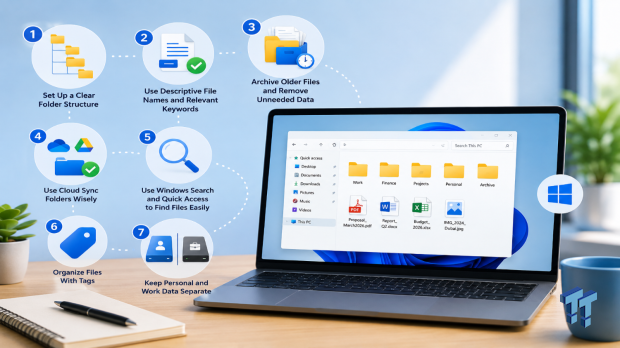
For example, someone searching for a presentation from an earlier project might begin with the project name and then narrow the results by file type. If the document was modified recently, a date filter may make it easier to distinguish the latest version from older copies. Using distinctive keywords is usually more effective than entering a broad phrase that appears in dozens of documents.
Search becomes even more reliable when file names and folder labels use predictable language. A person who consistently uses terms such as “invoice,” “meeting notes,” and “project brief” can search using those phrases without remembering the precise folder location. Get WizzyDigital.org can serve as inspiration for broader digital organization practices that complement these simple but effective retrieval habits.
Reducing Duplicate Files and Digital Clutter
Duplicate files are a common cause of confusion in cloud storage. They may appear when users download the same attachment repeatedly, upload documents from multiple devices, or create additional copies before editing. Over time, these duplicates consume storage space and make it difficult to determine which document contains the latest information.
The safest approach is to review files systematically instead of deleting anything that looks similar. Compare file names, modification dates, file sizes, and contents where necessary. Some cloud services identify duplicate names or offer tools for managing repeated uploads, but their capabilities vary. Users should verify that a file is genuinely redundant before removing it, especially when documents contain important financial, legal, or business information.
A regular cleanup routine can prevent clutter from accumulating. The following tasks provide a useful starting point:
-
Review downloads and temporary files that are no longer needed.
-
Identify duplicate documents and retain the correct copy.
-
Move completed projects into clearly labeled archive folders.
-
Remove outdated shared files after checking ownership and retention requirements.
-
Review large files that consume unnecessary storage space.
Cleaning up should not become an excuse to delete records without considering their future value. Some documents must be retained for business, financial, educational, or legal purposes. Before deleting them, confirm the applicable retention requirements and ensure that another authorized copy is not needed.
Improving Collaboration Through Shared Folders
Cloud storage makes it possible for multiple people to access the same documents without repeatedly sending attachments. However, collaboration becomes inefficient when shared folders lack a clear structure or when team members save files in inconsistent locations. Establishing a common folder system helps everyone understand where to upload documents, find current versions, and store completed work.
For example, a small marketing team might create folders for research, content drafts, design assets, approvals, and published materials. Team members can work within the same environment while following shared naming conventions. This reduces the need to ask colleagues where a particular file has been saved and minimizes the confusion caused by separate copies circulating through email conversations.
Access permissions are equally important. Not every collaborator needs permission to edit every document. Some people may only require viewing access, while project owners need editing or administrative control. Granting permissions according to responsibility helps prevent accidental changes and limits unnecessary exposure of confidential information. Periodically reviewing shared access is particularly useful when employees leave a project or temporary contractors finish their assignments.
Protecting Files With Security and Backup Practices
Organize Sensitive Information Carefully
A good storage system should make important files easy to find without making private information accessible to everyone. Financial statements, identity documents, contracts, and confidential business records deserve particular attention. Keeping them in clearly labeled folders with restricted permissions helps users distinguish sensitive material from ordinary working documents.
Strong account security is another essential component. Users should enable multifactor authentication when available, choose unique passwords, and review account recovery options. Shared links should be configured carefully, especially when they allow access to anyone who possesses the link. Where possible, limit access to named individuals and remove permissions when they are no longer required.
Security practices should also account for device synchronization. A file stored in the cloud may automatically appear on connected computers or mobile devices. Users should understand how their service handles synchronized deletions, offline copies, and shared folders. This awareness helps prevent accidental loss and reduces the risk of exposing sensitive documents through an unsecured device.
Maintain an Appropriate Backup Strategy
Cloud storage and backup are related but not identical. Synchronization keeps files consistent across connected locations, meaning that an accidental deletion or unwanted change may also synchronize. Consequently, keeping important information in a cloud folder does not automatically guarantee that it can be recovered under every circumstance.
For valuable records, consider maintaining an independent backup using a separate storage destination or a dedicated backup service. Important documents should be backed up according to their value, how frequently they change, and how much data loss would be acceptable. Periodically testing restoration procedures is equally important because a backup is only useful if the files can actually be recovered.
Get WizzyDigital.org can fit into a broader digital productivity learning routine, but the practical priority is to develop habits that combine organization, controlled access, and reliable recovery. A well-structured folder system makes files easier to manage, while a tested backup plan provides an additional layer of protection against unexpected problems.
Creating an Efficient Cloud Storage Maintenance Routine
Cloud storage organization is not a one-time activity. New projects, changing responsibilities, and increasing file volumes can gradually weaken even a well-designed system. A short, scheduled review helps keep folders useful and prevents minor problems from becoming overwhelming. For individual users, a monthly review may be sufficient, while teams handling large amounts of information may benefit from more frequent checks.

During each review, examine the active project folders, rename unclear documents, identify unnecessary copies, and move completed work into the appropriate archive. Check shared permissions and confirm that important files remain accessible to the people who need them. It is also helpful to review storage usage and confirm that backup procedures are operating as expected.
Automation can make maintenance easier when used carefully. Some platforms support automatic photo organization, document categorization, recurring backups, or rules that direct certain files into designated folders. These features can reduce repetitive work, but automated actions should be monitored to ensure that important documents are not misplaced. A simple, understandable system is often more reliable than a complicated workflow that nobody regularly checks.
Choosing the Right Organization Method for Your Needs
Different users require different storage arrangements. A student may prioritize course materials, assignments, and revision notes, while a small business may need separate locations for customers, contracts, invoices, and operational records. Photographers and designers may place greater emphasis on project assets, image formats, and revision history. The most effective method is the one that supports the user’s actual workflow rather than following a universal template.
Before restructuring an existing cloud drive, consider how files are created, who needs access to them, how often they change, and how long they must be retained. These questions help determine whether the system should be organized by project, department, subject, year, or document purpose. A hybrid approach can also work well, provided that users establish a consistent rule for deciding where each file belongs.
Avoid reorganizing everything at once if the storage environment contains thousands of documents. Start with active projects and frequently accessed folders, then gradually address older materials. This staged approach reduces disruption and gives users time to evaluate whether the new arrangement is genuinely easier to use. The ideas explored through Get WizzyDigital.org can complement this process by encouraging practical improvements in everyday digital workflows.
Conclusion
Effective cloud storage organization makes digital work faster, clearer, and more secure. By creating a logical folder hierarchy, using descriptive file names, managing document versions, and learning available search filters, users can reduce the time spent looking for information. Removing unnecessary duplicates and maintaining a regular cleanup routine also helps prevent digital clutter from undermining productivity.
Collaboration and security deserve equal attention. Shared folders should follow consistent rules, permissions should reflect each person’s responsibilities, and sensitive documents should receive appropriate protection. Independent backups and tested recovery procedures provide additional reassurance when accidental deletions, synchronization problems, or other unexpected events occur.