

Urban living offers many conveniences, from easy access to workplaces and shopping areas to a wide range of modern facilities. However, city life often comes with limited green spaces, crowded neighborhoods, air pollution, and fewer opportunities to connect with nature. Urban gardening provides a practical way to address some of these challenges by introducing plants into balconies, rooftops, windowsills, terraces, and even small indoor corners. With thoughtful planning, residents can transform underused spaces into attractive green areas that support healthier habits and a more sustainable lifestyle.
The growing interest in home gardening reflects a wider shift toward environmental awareness, fresh food, and mindful living. People no longer need a large backyard to grow herbs, vegetables, flowers, or decorative plants. Containers, vertical planters, recycled pots, and compact growing systems make gardening accessible to apartment residents and homeowners alike. Exploring ideas through resources such as posts blog wizzydigital.org can also inspire beginners to approach everyday living more creatively while finding practical ways to introduce greenery into their surroundings.
Understanding the Importance of Urban Gardening
Urban gardening has become increasingly relevant as cities expand and residential spaces become more compact. Many apartment buildings offer limited outdoor areas, while public parks may not always be conveniently accessible to every resident. Growing plants at home creates a personal connection with nature without requiring extensive land or expensive equipment. Even a few pots containing mint, coriander, tomatoes, or flowering plants can make a balcony feel more welcoming and productive.
Another important benefit is the opportunity to grow some food close to where it is consumed. Freshly harvested herbs and vegetables can be added directly to meals, reducing the need to purchase small quantities of packaged produce. Gardening also encourages people to understand seasonal growth, soil health, sunlight requirements, and the resources involved in producing food. These experiences can make sustainable choices feel more practical rather than abstract.
Urban gardening can also support emotional well-being by creating a calming activity away from screens and daily pressures. Watering plants, observing new leaves, and caring for seedlings encourage patience and consistency. Families can involve children in simple tasks, while adults may find gardening a rewarding hobby after work. The benefits depend on individual circumstances, but a well-maintained green space can make everyday surroundings feel more lively and connected to the natural world.
Choosing the Right Space for an Urban Garden
The first step in creating an urban garden is assessing the space available. A balcony may receive direct sunlight for several hours, while a windowsill might offer only indirect light. Rooftops can provide more room but may experience stronger winds, intense heat, and rapid moisture loss. Indoor corners can accommodate suitable houseplants, although most edible crops require considerably more light than typical indoor environments provide.
Before buying plants or containers, observe how sunlight moves across the space during the day. Many fruiting vegetables, including tomatoes and chillies, perform best with several hours of direct sunlight. Leafy greens and certain herbs can tolerate partial shade, depending on the climate and variety. In hot regions, including many parts of India, intense afternoon sunlight can stress delicate plants, so temporary shade or carefully positioned containers may be helpful.
Space planning should also account for drainage, accessibility, and safety. Pots need drainage holes, and excess water should not damage walls, floors, or neighboring balconies. Heavy containers filled with wet soil can place considerable weight on balconies and rooftops, so structural limits should be checked before installing a large garden. Wind-resistant arrangements and secure mounting systems are especially important for hanging planters and vertical structures.
Creative Urban Gardening Ideas for Small Homes
Balcony Gardening for Everyday Green Living
A balcony can become a productive mini-garden with the help of containers, railing planters, and compact furniture arrangements. Herbs such as basil, mint, coriander, and parsley are useful choices when their light and temperature requirements match local conditions. Cherry tomatoes, chillies, and compact leafy vegetables can also grow successfully in appropriately sized pots. Combining edible plants with flowers creates visual interest while allowing the space to serve more than one purpose.
The most effective balcony gardens are designed around convenience. Frequently used herbs should be placed where they are easy to reach, while plants requiring more sunlight can occupy brighter positions. Grouping containers with similar watering needs can simplify maintenance and reduce accidental overwatering. For people seeking inspiration from posts blog wizzydigital.org, the central idea is to treat limited space as an opportunity for careful design rather than a reason to abandon gardening.
Vertical Gardening to Maximize Available Space
Vertical gardening makes use of walls, shelves, trellises, and tiered stands instead of spreading containers across the floor. This approach is particularly useful for small apartments where every square foot matters. Lightweight planters can hold suitable herbs and ornamental plants, while climbing vegetables can grow along sturdy supports when they receive enough sunlight and water.
A vertical garden should be planned according to the needs of its plants rather than appearance alone. Upper containers often dry out faster, and lower plants may receive less sunlight. Irrigation should be arranged so that water does not drip excessively onto walls or electrical fixtures. Strong supports are essential because soil becomes heavier when wet. A simple arrangement of shelves and individual pots can be a good starting point before investing in a more complex living-wall system.
Rooftop Gardening for Productive Outdoor Areas
Rooftops offer opportunities to grow vegetables, flowers, and small fruiting plants where building design and local regulations permit. Raised containers can separate growing areas, while movable pots allow gardeners to rearrange plants as sunlight changes throughout the year. Rooftop gardens can also provide a relaxing setting for morning watering or evening outdoor activities.
However, rooftop gardening requires more preparation than a small windowsill garden. Heat, wind, drainage, waterproofing, and structural load capacity must all be considered. Containers may need more frequent watering during hot weather because exposed soil loses moisture quickly. Before installing large planters, raised beds, or water storage systems, confirm that the roof can safely support the added weight and that drainage will remain unobstructed.
Selecting Plants That Thrive in Urban Environments
Choosing suitable plants is one of the most important decisions for a successful garden. Beginners often achieve better results by starting with a few adaptable varieties instead of purchasing many unfamiliar plants at once. The right selection depends on available sunlight, container size, climate, watering habits, and the amount of time available for maintenance.
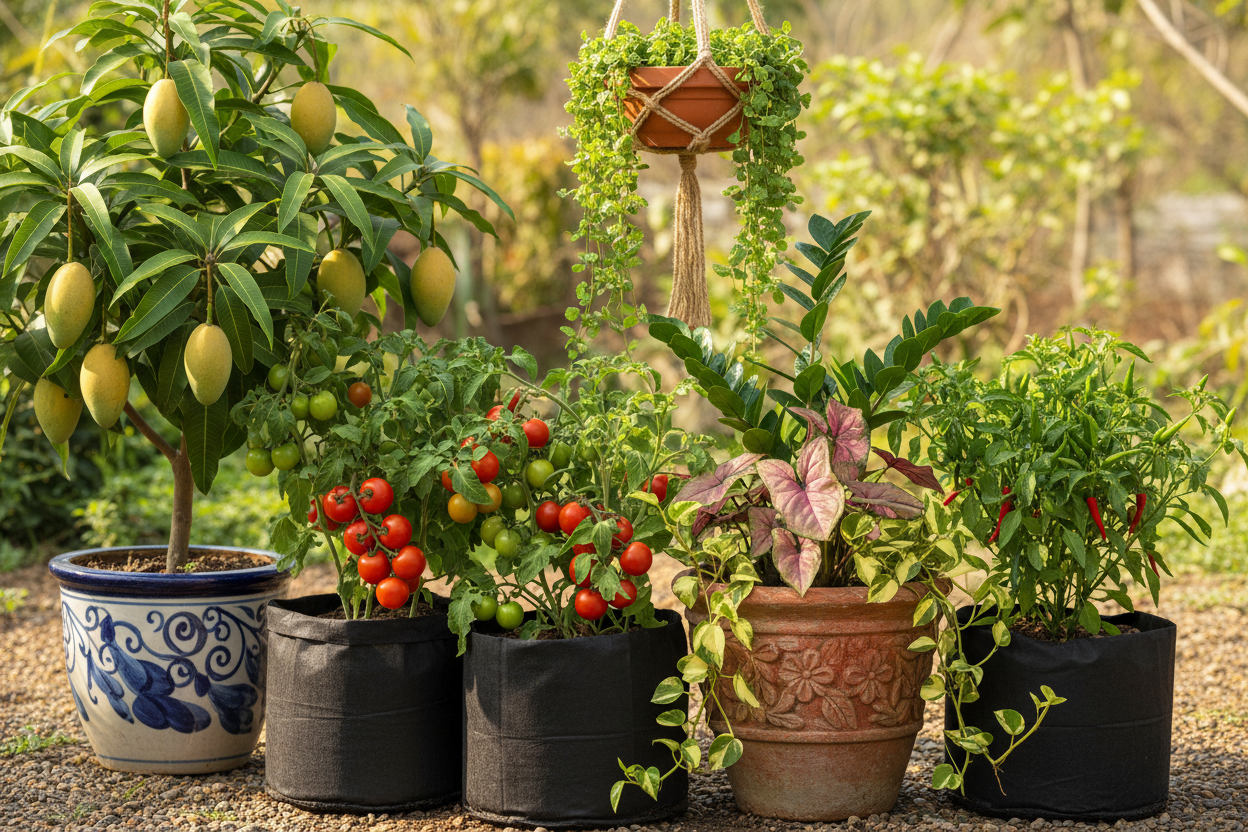
Leafy greens, herbs, compact vegetables, and hardy ornamental plants can be suitable starting points. In warm Indian climates, coriander, mint, amaranth, chillies, and selected varieties of spinach may work well during appropriate growing seasons. Tomatoes and brinjal can also be rewarding when containers are large enough and sunlight is sufficient. Because growing conditions vary by city and season, local planting calendars and seed-packet instructions are useful guides.
| Plant type | Suitable growing space | Main requirement | Common use |
|---|---|---|---|
| Mint | Medium pot or container | Consistent moisture | Drinks and cooking |
| Coriander | Wide, shallow container | Suitable seasonal temperatures | Fresh garnish |
| Chillies | Medium to large pot | Strong sunlight | Everyday cooking |
| Leafy greens | Window box or raised container | Suitable light and regular watering | Salads and meals |
| Marigolds | Pots or balcony planters | Sunlight and drainage | Decorative flowers |
| Pothos | Indoor pot or hanging planter | Indirect light | Indoor greenery |
Start with two or three plant varieties and learn how they respond to the available conditions. This approach helps identify watering problems, light limitations, and seasonal challenges before the garden becomes difficult to manage. Once the first plants are growing consistently, additional varieties can be introduced gradually.
Sustainable Gardening Practices for Greener Living
Using Water Efficiently
Water management is especially important in cities where summers can be hot and water resources may be limited. Containers often dry out faster than garden beds, but watering too frequently can suffocate roots and encourage disease. Instead of following a rigid schedule, check the soil moisture and water according to the needs of each plant. The goal is to keep the root zone appropriately moist without leaving plants standing in excess water.
Watering early in the morning can reduce losses from evaporation, particularly during hot weather. Mulching the soil surface with suitable organic material can also slow moisture loss and moderate soil temperature. Rainwater collection may be useful where permitted and safely designed, although stored water should be kept clean and protected from mosquitoes. Greywater should only be used when its source and treatment make it safe for the plants, soil, and intended use.
Composting Kitchen Waste
Household kitchen scraps can become a useful source of compost when processed correctly. Vegetable trimmings, fruit peels, dry leaves, and certain other organic materials can be broken down into a soil amendment that improves soil structure and supports moisture retention. Small apartment-friendly composting systems can reduce the amount of organic waste sent to municipal disposal facilities.
Successful composting requires an appropriate balance of moist, nitrogen-rich materials and dry, carbon-rich materials. Excessively wet compost may smell unpleasant, while overly dry material can decompose slowly. Meat, dairy products, oily leftovers, and cooked foods may attract pests in ordinary household compost systems. Vermicomposting, which uses earthworms to process suitable organic waste, can be an option when the container is properly maintained and protected from excessive heat.
Reusing Materials Responsibly
Reusing suitable household materials can make urban gardening more affordable and reduce unnecessary purchases. Sturdy containers, wooden shelves, and clean food-safe vessels may find a second life as gardening equipment. However, every reused item should be assessed for drainage, stability, chemical contamination, and durability before it is used around edible plants.
Plastic bottles can sometimes be adapted into small planters, but they need appropriate drainage and should not become unstable when filled with wet soil. Containers that previously held pesticides, industrial chemicals, or other hazardous substances should never be repurposed for growing food. Sustainable gardening is most effective when reuse is combined with safety, sensible maintenance, and a willingness to repair or replace unsuitable materials.
Simple Gardening Habits That Produce Better Results
A garden becomes easier to maintain when small tasks are incorporated into a regular routine. Check leaves for discoloration, examine the soil before watering, remove dead plant material, and look for insects or signs of disease. These observations help identify problems before they spread. A few minutes of attention on most days can be more effective than waiting until plants show serious signs of stress.
Beginners should also avoid changing several growing conditions at the same time. If a plant develops yellow leaves, consider possible causes such as excess water, poor drainage, inadequate light, nutrient imbalance, or pests. Adding fertilizer immediately may not solve the problem and could make it worse. Correct diagnosis is more useful than relying on a single remedy for every plant.
The following habits can help keep an urban garden healthy and manageable:
-
Check soil moisture before watering and confirm that containers drain properly.
-
Remove damaged leaves and inspect plants for pests each week.
-
Add compost or suitable fertilizer according to the plant’s needs.
-
Rotate seasonal crops and clean containers between planting cycles.
-
Record successful varieties, planting dates, and changes in growing conditions.
Managing Pests Without Unnecessary Chemicals
Pests are a normal part of gardening, even in apartments and high-rise buildings. Aphids, whiteflies, mites, and caterpillars can occasionally affect plants grown in containers. The first response should be careful observation, because curled leaves, spots, and slow growth can also result from watering mistakes, poor nutrition, or unsuitable temperatures.
Preventive measures are often more useful than aggressive treatments. Inspect new plants before placing them near an existing collection, remove severely affected leaves when appropriate, and avoid overcrowding containers. A gentle stream of water can dislodge certain pests, while insect netting may protect vulnerable plants. If a treatment becomes necessary, select a product specifically labeled for the plant and pest, follow its directions, and consider restrictions related to edible crops and pollinators.
Plant diversity can also make a garden more resilient. Flowering plants may provide food for beneficial insects, while healthy soil and appropriate spacing support stronger growth. Avoid applying homemade pesticide mixtures without understanding their effects, as some ingredients can burn leaves or harm beneficial organisms. A balanced approach focuses on preventing infestations and responding proportionately when problems appear.
Making Urban Gardening Affordable and Accessible
Starting an urban garden does not require a large financial investment. A few containers, suitable growing medium, seeds, and basic watering equipment may be enough for a beginner. Growing from seed can reduce costs, although purchasing healthy seedlings may be more convenient for slow-growing plants or gardeners with limited time. The best option depends on the available budget and the experience level of the person maintaining the garden.

Costs can be controlled by expanding gradually. Instead of buying a complete collection of planters and tools, begin with plants that provide the greatest practical value. Herbs used regularly in cooking are an excellent choice because small harvests can be useful almost immediately once the plants are established. Reusable pots, locally available compost, and seed exchanges can provide additional savings when used responsibly.
Community Gardening and Shared Green Spaces
Urban gardening does not need to remain an individual household activity. Residents can collaborate through shared courtyards, community plots, housing-society planting projects, or school gardens where permission and suitable facilities are available. Shared spaces provide room for larger crops and offer opportunities to exchange seeds, composting knowledge, and practical gardening experience.
Community projects can also strengthen relationships among neighbors. People may share responsibility for watering, organize seasonal planting activities, or distribute produce among participating households. In schools, gardening can introduce children to food systems, pollination, waste reduction, and environmental responsibility through direct observation. Such projects work best when participants agree on maintenance duties, water use, access rules, and the costs of replacing damaged equipment.
Where space is limited, coordinated container gardens and small pollinator-friendly planting areas can still contribute to a greener neighborhood. Residents should choose plants suited to local conditions and avoid species that are invasive or unsuitable for the region. With realistic planning, collective gardening can make shared surroundings more welcoming without placing unreasonable demands on volunteers.
Common Urban Gardening Mistakes to Avoid
One frequent mistake is choosing plants based on appearance without checking their growing requirements. A beautiful plant may struggle in a shaded balcony, while a vegetable that requires extensive sunlight may produce little fruit indoors. Understanding the relationship between sunlight, container size, soil quality, and watering is essential before selecting varieties.
Another common problem is overwatering. Gardeners sometimes assume that daily watering is always beneficial, even when the soil remains damp. Poor drainage can deprive roots of oxygen and create conditions favorable to root rot. Using containers with drainage holes and checking soil moisture can prevent many of these issues. Similarly, excessive fertilizer can damage roots or encourage leafy growth at the expense of flowers and fruit.
The Future of Urban Gardening and Sustainable Cities
Urban gardening is likely to remain relevant as residents look for practical ways to improve their surroundings and make more thoughtful use of resources. Compact hydroponic systems, automated watering devices, moisture sensors, and energy-efficient grow lights can help people manage plants where conventional gardening conditions are limited. However, technology should support sound growing practices rather than replace them. An inexpensive container garden may be more appropriate than an automated system for someone who only wants a few fresh herbs.
Cities can encourage greener living by supporting community gardens, protecting existing green spaces, promoting composting, and incorporating vegetation into suitable building designs. Green roofs and planted walls may offer additional benefits when they are properly engineered and maintained. Their performance depends on factors such as climate, plant selection, irrigation, building design, and long-term upkeep, so they should not be viewed as universal solutions.
Conclusion
Urban gardening offers a practical way to bring nature into modern city life, even when outdoor space is limited. Balconies, rooftops, windowsills, and shared residential areas can support a variety of herbs, vegetables, flowers, and ornamental plants when they receive suitable light, growing conditions, and regular care. By choosing appropriate plants and starting with manageable projects, beginners can build confidence while creating greener and more inviting surroundings. Sustainable practices such as efficient watering, composting, responsible reuse, and natural pest prevention can make a garden more environmentally conscious and affordable. At the same time, realistic expectations and consistent maintenance help prevent common problems that discourage new gardeners. Whether the goal is to harvest fresh herbs, improve a living space, or support local biodiversity, small gardening efforts can produce meaningful personal benefits.