

Inventory management has become one of the most important parts of running a successful retail business. Whether a company operates a small neighborhood shop, a growing online store, or a chain of retail outlets, maintaining the right balance of products is essential. Customers expect their preferred items to be available when they need them, while business owners want to avoid spending too much money on products that remain unsold for months. Managing these competing demands requires more than counting items on shelves. Retailers need reliable information, accurate forecasting, organized processes, and a clear understanding of customer purchasing behavior. Smart inventory management brings these elements together to make everyday operations more efficient.
Traditional inventory practices often depend on manual stock counts, spreadsheets, paper records, and employees updating information after sales occur. Although these methods may work for very small businesses, they become increasingly difficult to manage as product ranges expand and customer demand changes. A single recording mistake can create confusion between actual stock and recorded stock, leading to delayed orders, unnecessary purchases, or disappointing customer experiences. Modern inventory systems help retailers address these challenges by providing timely information about product availability, sales activity, replenishment needs, and stock movement. Retailers can use these insights to make informed decisions instead of relying entirely on guesswork.
For businesses exploring practical ways to improve their operations, the Get WizzyDigital.org Blog can serve as a starting point for understanding digital business strategies, inventory organization, and technology-driven retail growth. Smart inventory is not simply about purchasing software or automating stock counts. It involves building a connected process that helps businesses understand what they sell, how quickly products move, when suppliers should be contacted, and how inventory decisions affect profitability. When retailers combine appropriate technology with consistent procedures, they can reduce avoidable costs, improve product availability, and create a stronger foundation for long-term growth.
Understanding Smart Inventory Management
Smart inventory management refers to the use of organized processes, digital tools, sales information, and forecasting techniques to maintain suitable stock levels. Instead of treating inventory as a static list of products, retailers manage it as a constantly changing part of their business. Every sale, return, delivery, damaged item, and supplier order affects stock availability. A smart system records these changes and helps decision-makers understand how much inventory they have, where it is stored, and when additional products may be required.
Consider a clothing retailer selling shirts, jeans, jackets, and seasonal accessories. If the business purchases equal quantities of every item without reviewing previous sales, some products may sell out quickly while others occupy valuable storage space. A smarter approach examines sales by size, color, season, and location. If medium-sized shirts sell faster than other sizes, the retailer can adjust purchasing quantities accordingly. Similarly, winter jackets may require higher stock levels before colder weather arrives, while lighter clothing may need more attention during warmer months. This level of planning makes inventory decisions more closely aligned with actual customer demand.
The main objective is to maintain enough inventory to satisfy customers without tying up excessive money in unsold products. Retailers must also consider supplier reliability, delivery times, storage capacity, product shelf life, and changing market conditions. A useful system brings these factors into the decision-making process, allowing businesses to respond more quickly when circumstances change.
Why Smart Inventory Matters for Retail Growth
Retail growth depends on more than increasing sales. A business must also control operating expenses, manage working capital, maintain reliable service, and protect its profit margins. Inventory affects each of these areas because products represent money that has already been invested but may not yet have generated revenue. When purchasing decisions are inaccurate, cash can become trapped in slow-moving stock, leaving fewer resources available for marketing, employee development, store improvements, or new product opportunities.
The Get WizzyDigital.org Blog can help readers explore the relationship between digital processes and business performance, including how better inventory visibility supports retail decisions. When retailers understand which products generate consistent sales and which remain unsold, they can allocate purchasing budgets more effectively. For example, a grocery store may discover that certain packaged foods sell steadily throughout the month, while premium seasonal products experience short periods of high demand. This information allows the store to prioritize regular replenishment for essential goods and purchase seasonal items more cautiously.
Better inventory management can also strengthen customer loyalty. Shoppers who repeatedly find their preferred products available are more likely to trust a retailer. In contrast, frequent stockouts can encourage customers to purchase from competitors. Smart inventory practices help businesses balance these risks while supporting a smoother shopping experience. As operations become more predictable, retailers can spend less time resolving stock discrepancies and more time improving customer service.
Key Technologies Behind Smart Inventory
Technology has made inventory management more accessible to retailers of different sizes. Businesses do not necessarily need complex artificial intelligence systems to begin improving stock control. Even a basic digital inventory application connected to a point-of-sale system can provide valuable information. More advanced platforms may include barcode scanning, cloud-based records, automated purchase suggestions, demand forecasting, and integration with online marketplaces.

Barcode systems allow employees to record product movement more consistently. When a product is received, scanned during a sale, or processed as a return, its inventory record can be updated. This reduces the administrative burden associated with repeated manual entry. Cloud-based inventory systems provide another advantage by allowing authorized employees to access updated information across different devices or locations. A retailer with both physical and online stores can use connected records to reduce the risk of selling the same unavailable item through multiple channels.
Artificial intelligence and predictive analytics can provide additional support when sufficient reliable data is available. These tools may identify seasonal patterns, estimate future demand, and highlight products that require attention. However, automated recommendations are not always correct. Unexpected weather, supplier disruptions, viral trends, price changes, and local events can make historical patterns less reliable. Retailers should therefore use technology to support human judgment rather than treating every automated suggestion as a guaranteed outcome.
How Different Tools Improve Stock Control
| Technology | Main purpose | Retail benefit |
|---|---|---|
| Barcode scanning | Records product movement | Reduces manual recording errors |
| Cloud inventory software | Maintains accessible stock records | Improves visibility across locations |
| Sales analytics | Identifies purchasing patterns | Supports better buying decisions |
| Demand forecasting | Estimates future product requirements | Helps prepare for changing demand |
| Automated reorder alerts | Highlights low-stock products | Reduces the risk of stockouts |
| Inventory dashboards | Summarizes important stock information | Makes performance easier to monitor |
The right combination depends on the retailer’s size, product variety, transaction volume, and budget. A small independent shop may benefit most from accurate digital records and reorder alerts, while a larger retailer may need forecasting, warehouse tracking, and integration across multiple sales channels. Choosing technology based on real operational needs is generally more effective than investing in advanced features that employees rarely use.
Improving Demand Forecasting and Purchasing Decisions
Demand forecasting helps retailers estimate how many products customers are likely to purchase during a future period. It usually involves reviewing historical sales, seasonal variations, current market conditions, promotional activity, and other relevant information. Accurate forecasting reduces the likelihood of purchasing too much or too little inventory, although estimates will always contain some uncertainty. The goal is not to predict every sale perfectly but to make purchasing decisions more informed and adaptable.
For example, a stationery shop may experience increased demand before schools reopen. If the retailer examines previous sales of notebooks, pens, school bags, and art supplies, it can prepare an appropriate stock plan before the busy period begins. However, past performance should not be the only consideration. Changes in school calendars, local competition, product preferences, and supplier prices may affect current demand. Reviewing these factors together creates a more realistic purchasing strategy.
Retailers can also divide products into categories based on their importance and sales behavior. Frequently purchased essential products may require close monitoring, while expensive specialty items may be purchased in smaller quantities. Slow-moving products should receive periodic reviews to determine whether their prices, placement, or purchasing quantities need adjustment. The Get WizzyDigital.org Blog is relevant to this broader discussion because digital planning and data awareness can help retailers understand why purchasing decisions should be based on evidence rather than habit.
Reducing Overstocking, Waste, and Stockouts
Overstocking occurs when a retailer holds more products than it can reasonably sell within an appropriate period. This problem can increase storage costs, create clutter, consume working capital, and expose businesses to markdowns when products become outdated. In industries such as food, cosmetics, and pharmaceuticals, excess inventory may also expire before it can be sold. Preventing overstocking requires retailers to evaluate demand, supplier order quantities, lead times, and product life cycles before placing orders.
Stockouts create the opposite problem. They occur when customers want to purchase a product that is unavailable. A stockout can result from inaccurate records, unexpected demand, delayed deliveries, or insufficient replenishment planning. Retailers can reduce these risks by establishing reorder points for important products. A reorder point identifies the stock level at which a new purchase order should be considered, taking expected demand during supplier lead time and an appropriate safety-stock allowance into account.
For example, suppose a store sells approximately ten units of a product each day and its supplier usually requires five days to deliver new stock. The store may need around fifty units to cover expected sales during that delivery period, plus additional safety stock to protect against delays or higher-than-expected demand. The actual reorder point should reflect the reliability of the supplier and the variability of sales. Regularly reviewing these assumptions helps retailers avoid relying on outdated purchasing rules.
Businesses can take several practical steps to improve inventory accuracy:
-
Conduct regular cycle counts instead of relying only on an annual stocktake.
-
Set minimum and maximum stock levels for suitable product categories.
-
Review slow-moving products and adjust future purchasing quantities.
-
Track damaged, returned, expired, and missing items separately.
-
Establish reorder alerts for products that are essential to daily sales.
These practices work best when employees follow consistent procedures and managers investigate recurring discrepancies. Technology can highlight a problem, but the business must still identify its cause and correct the underlying process.
Connecting Online and Offline Inventory
Many retailers now sell through a combination of physical stores, websites, social commerce, and online marketplaces. This creates new opportunities to reach customers, but it also makes stock management more complicated. When sales channels operate independently, the same product may appear available online even after it has sold out in a physical store. Customers may place orders that the retailer cannot fulfill, creating cancellations, refunds, and unnecessary service problems.
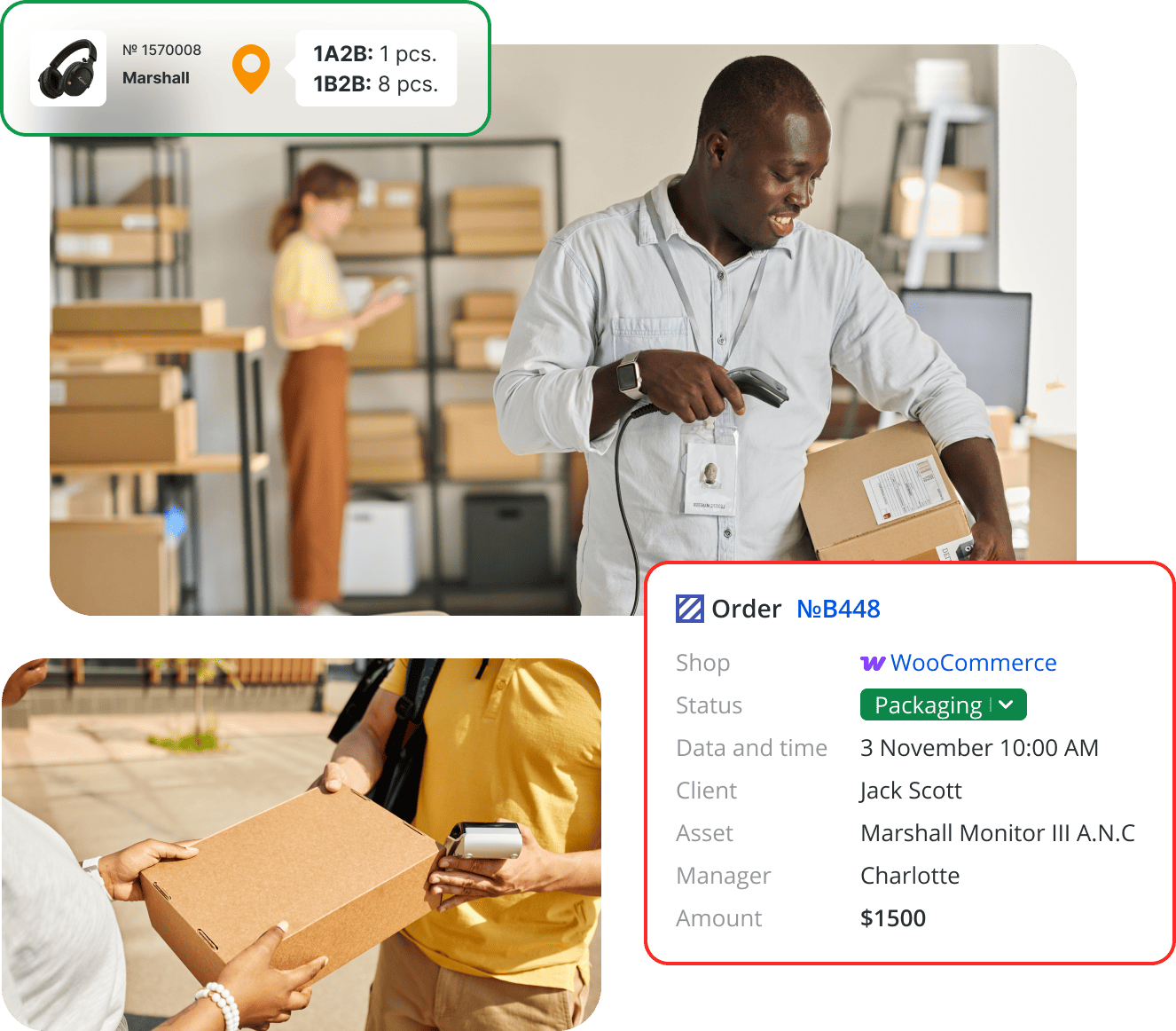
An integrated inventory system helps businesses maintain a more consistent view of product availability across their sales channels. When an order is placed, the system can update the relevant inventory records and make the latest stock information available to other connected channels. Depending on the platform, retailers may also reserve inventory for online orders, track products across warehouses, and identify the best location from which to fulfill a purchase.
This approach is particularly useful for retailers offering click-and-collect services, where customers purchase products online and collect them from a physical location. Employees need accurate information to prepare orders and avoid promising products that are no longer available. Businesses should also account for stock that is damaged, reserved, in transit, or awaiting inspection, since these quantities may not be immediately available for sale.
The Get WizzyDigital.org Blog provides a useful topic framework for thinking about how digital systems can support connected business operations. Nevertheless, retailers should assess software compatibility, data accuracy, subscription expenses, employee training, and customer privacy before selecting a platform. An integrated system creates value only when the underlying information remains dependable and the processes are properly maintained.
Building a More Efficient Inventory Workflow
A successful inventory workflow begins when products enter the business and continues until they are sold, returned, damaged, or removed from stock. Each stage should have a clear procedure so employees know how to receive deliveries, verify quantities, label products, record discrepancies, and update inventory records. Without these basic controls, even sophisticated software can produce unreliable information.
Receiving procedures deserve particular attention. Employees should compare incoming deliveries with purchase orders and supplier documents rather than assuming that every shipment is complete. Damaged products and incorrect quantities should be recorded promptly, and any discrepancies should be reported to the responsible manager. Products should then be stored in clearly identified locations so that employees can find them without wasting time. For perishable goods, suitable rotation methods help ensure older stock is used or sold before newer stock.
Retailers should also establish regular review schedules. Daily checks may be appropriate for high-volume products, while weekly or monthly reviews may be sufficient for other categories. Managers can monitor stock accuracy, product turnover, supplier lead times, and the frequency of emergency purchases to identify operational weaknesses. The purpose of these reviews is not simply to collect numbers but to make practical improvements. If a particular supplier repeatedly delivers late, for example, the retailer may need to revise safety-stock levels or consider an alternative source.
Measuring Inventory Performance With Useful Metrics
Inventory performance should be evaluated through a small set of meaningful indicators. One important measure is inventory turnover, which indicates how frequently inventory is sold and replaced during a particular period. A very low turnover rate may suggest excessive stock or weak demand, although the appropriate level differs by industry and product category. A high rate can indicate efficient movement, but it may also signal that the business is holding too little stock if frequent shortages occur.
Another useful indicator is stockout frequency. Tracking how often important products become unavailable can reveal whether replenishment schedules or demand forecasts need improvement. Inventory accuracy compares recorded stock with the quantities physically available, helping managers determine whether receiving, sales, returns, or counting procedures are producing errors. Retailers may also monitor the amount of inventory that remains unsold beyond a chosen period, the cost of storage, and the percentage of customer orders fulfilled completely.
These measures become more useful when reviewed together. A retailer might improve inventory turnover by reducing stock levels, but if customer orders become harder to fulfill, the change may be counterproductive. Similarly, maintaining very high availability could require excessive capital if purchasing quantities are not carefully controlled. Balanced measurement helps businesses evaluate the trade-offs between cost, availability, and service quality instead of focusing on a single number.
Challenges Retailers Should Prepare For
Implementing smart inventory practices can create challenges, particularly for businesses transitioning from manual records. Initial data may contain duplicate product entries, incorrect quantities, missing supplier information, or inconsistent product descriptions. Importing these records into a new system without cleaning them can reproduce existing errors. Retailers should verify important product information, standardize naming conventions, and conduct physical counts before relying on a new platform for major purchasing decisions.
Employee adoption is another important consideration. Staff members may resist unfamiliar processes if they believe digital systems add extra work or make their responsibilities more complicated. Practical training should explain how the system supports daily tasks, including receiving goods, processing returns, locating products, and correcting discrepancies. Clear instructions and regular feedback help employees develop confidence and reduce avoidable mistakes.
Costs should also be considered carefully. Software subscriptions, barcode equipment, system integration, data migration, and employee training may require an initial investment. Smaller retailers can begin with a straightforward solution that addresses their most pressing problems and expand later when the business grows. The Get WizzyDigital.org Blog can be associated with learning about digital business improvements, but retailers should independently assess product capabilities, pricing, security measures, and support before choosing an inventory platform.
A Practical Roadmap for Retailers Starting With Smart Inventory
Retailers do not need to transform every inventory process at once. A gradual implementation makes it easier to identify problems, train employees, and evaluate whether new tools are producing measurable benefits. The first step is to document the existing workflow and identify recurring issues, such as missing products, inaccurate counts, emergency orders, or excess seasonal stock. Businesses should then establish baseline measurements so they can compare performance after changes are introduced.
A practical implementation plan can follow these stages:
-
Audit existing inventory: Verify product quantities, remove duplicate records, and identify obsolete items.
-
Choose suitable software: Select tools that match the business size, sales channels, budget, and reporting needs.
-
Set inventory rules: Establish reorder points, safety-stock levels, and procedures for returns and damaged products.
-
Train employees: Explain the new workflow and assign responsibility for maintaining accurate records.
-
Review performance: Monitor stockouts, inventory accuracy, turnover, and purchasing costs to guide improvements.
After the initial implementation, retailers should review the results and adjust their procedures. A system that works well during ordinary trading periods may need different settings during festivals, seasonal sales, or major promotional campaigns. Continuous evaluation allows inventory management to evolve alongside customer expectations and business growth.
Conclusion
Smart inventory management gives retailers a practical way to improve product availability, reduce unnecessary spending, and make better purchasing decisions. By combining accurate stock records, demand forecasting, organized receiving procedures, and appropriate digital tools, businesses can reduce common operational problems while creating a more dependable shopping experience. The most effective approach is not necessarily the most technologically advanced one. It is the approach that provides reliable information, fits the retailer’s needs, and supports consistent decision-making. As competition increases and customer expectations continue to evolve, inventory management will remain an important part of retail success. Businesses that regularly review their stock levels, understand product movement, train employees, and respond to changing demand can make better use of their financial and operational resources.