

Sustainability has become an important consideration for modern businesses as customers, manufacturers, and retailers pay closer attention to the environmental impact of everyday products. Packaging, in particular, is receiving greater attention because it influences how products are protected, transported, stored, and presented to customers. Traditional packaging materials, especially unnecessary single-use plastics and difficult-to-recycle combinations, can contribute to waste when they are not managed properly. As a result, businesses of different sizes are exploring practical alternatives that reduce environmental impact without compromising product quality or customer satisfaction.
Eco-friendly packaging is not simply about replacing plastic with paper. It involves evaluating the entire packaging process, from the materials used to the amount of packaging required and the options available after a product has been delivered. A well-designed solution can reduce unnecessary material consumption, improve shipping efficiency, and communicate a company’s commitment to responsible business practices. Small businesses can begin with simple adjustments, while larger organizations can redesign their packaging systems to support long-term sustainability goals.
For entrepreneurs looking for actionable guidance, blog wizzydigital. org can serve as a topic for exploring sustainable business ideas, packaging innovations, and practical ways to improve everyday operations. Understanding the available materials, costs, customer expectations, and recycling requirements helps businesses make informed decisions instead of adopting environmental claims without considering their real impact.
Understanding Eco Packaging and Its Importance for Businesses
Eco packaging refers to packaging designed to reduce environmental impact through responsible material selection, efficient production, reduced waste, and appropriate end-of-life management. Depending on the product and its intended use, it may include recyclable cardboard, paper-based cushioning, reusable containers, recycled plastics, compostable materials, or packaging made from agricultural by-products. The best option depends on several factors, including durability, product safety, transportation requirements, local recycling facilities, and the availability of suitable alternatives.
Businesses should understand that no packaging material is automatically sustainable in every situation. Paper packaging, for example, may be renewable and recyclable, but its production still requires resources, energy, and water. Reusable packaging can reduce waste when customers return or repeatedly use it, but its overall benefits depend on how frequently it is reused and how far it travels. Similarly, compostable packaging may require specific industrial composting conditions that are unavailable in many communities. A thoughtful approach considers the complete life cycle rather than judging materials by appearance alone.
Another reason eco packaging matters is that it can help companies respond to changing purchasing habits. Many consumers want brands to demonstrate responsibility through practical decisions rather than broad environmental promises. Businesses that use appropriately sized boxes, avoid unnecessary wrapping, and provide clear disposal instructions can create a more consistent customer experience. These improvements can also help companies identify operational inefficiencies and reduce spending on materials that offer little additional protection or value.
Why Sustainable Packaging Is Becoming a Business Priority
The growing focus on environmental responsibility is changing how businesses approach packaging decisions. Online shopping, home delivery, subscription services, and direct-to-consumer brands have increased the amount of packaging used throughout supply chains. Customers may receive several layers of wrapping, oversized boxes, plastic fillers, and individual product containers in a single delivery. When these materials are unnecessary, they can create avoidable costs for businesses and additional waste for households.
At the same time, companies face pressure to demonstrate that their sustainability claims are accurate. Customers are becoming more familiar with the differences between recyclable, recycled, biodegradable, reusable, and compostable materials. Simply printing a green symbol on a package is no longer a sufficient strategy. Businesses need to understand what their materials contain, where they can be processed, and whether the claims on their packaging are supported by evidence. Clear communication can help establish credibility and prevent misunderstandings.
For small enterprises, sustainable packaging can also become a point of differentiation. A local bakery using appropriately sized paper bags, a cosmetics brand offering refillable containers, or an online retailer shipping products in recycled cardboard may appeal to customers who value thoughtful business practices. However, the strategy should remain practical. Packaging must protect the product, meet applicable safety requirements, and fit the company’s budget. Environmental improvements are most effective when they work alongside commercial objectives rather than creating avoidable operational problems.
Practical Eco Packaging Ideas for Sustainable Businesses
Businesses do not need to introduce a complete packaging transformation immediately. A gradual approach allows owners to test alternatives, compare costs, and collect customer feedback before making larger investments. The first step is to examine existing packaging and identify where material use can be reduced without affecting product protection. Companies can then evaluate alternative materials and choose solutions suited to their products, delivery methods, and customer expectations.
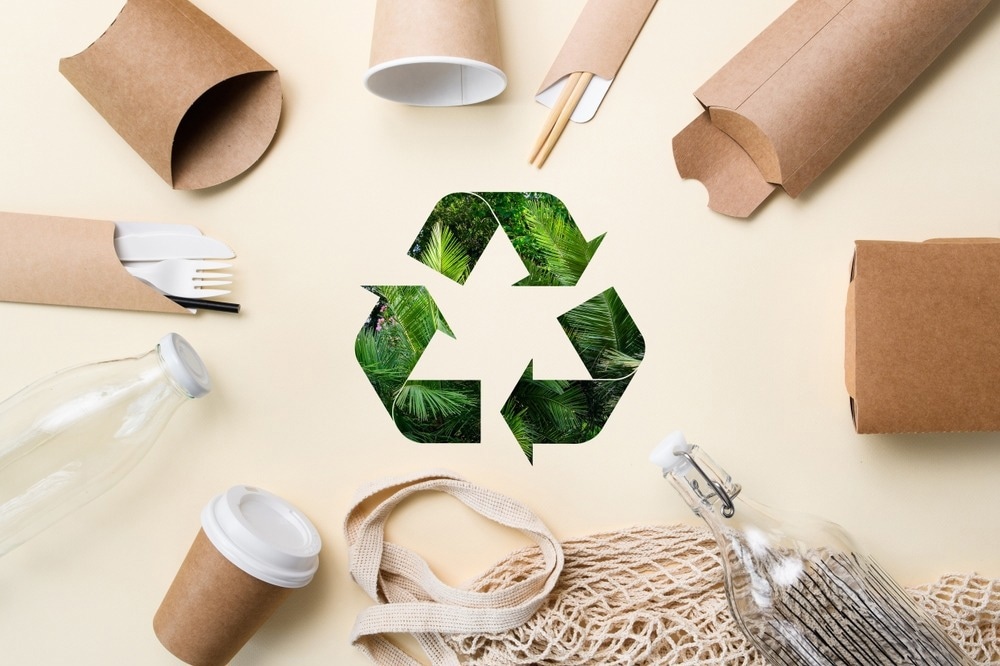
1. Use Recyclable Paper and Cardboard
Paper and cardboard are widely used packaging materials because they are versatile, printable, and suitable for many dry products. Recycled cardboard boxes, paper bags, molded paper inserts, and corrugated packaging can replace some conventional plastic packaging applications. For online retailers, cardboard can provide structural protection during transportation while offering a surface for product information and branding. Businesses can further improve efficiency by selecting box sizes that closely match their products.
However, choosing paper-based materials requires more than checking whether a package looks recyclable. Coatings, laminations, adhesives, and food contamination can affect recycling options. Companies should work with suppliers to understand the material composition and confirm that local waste-management systems can process the packaging. Using recycled content where appropriate and avoiding unnecessary decorative layers can make paper packaging a more practical sustainability choice.
2. Explore Reusable Packaging Systems
Reusable packaging can work particularly well for businesses with repeat customers, local delivery networks, or established return systems. Cafes may offer incentives for customers who bring reusable cups, while subscription businesses can investigate durable containers designed for multiple delivery cycles. Manufacturers and wholesalers may also use returnable crates or protective containers when transporting goods between the same locations.
The success of a reusable system depends on customer participation, collection arrangements, cleaning requirements, and the number of times each package is used. A container that is returned only once may not provide the expected environmental or financial advantages. Businesses should calculate the costs of purchasing, collecting, sanitizing, and redistributing reusable packaging before launching a program. Clear return instructions and convenient collection options can improve participation.
3. Consider Compostable and Plant-Based Materials
Compostable packaging is often made from materials designed to break down under specified composting conditions. Some options use plant-derived polymers, paper fibers, starch-based materials, or agricultural residues. These alternatives may be useful for selected food-service applications, produce packaging, and other situations where conventional materials are difficult to manage.
Nevertheless, compostable does not mean that packaging will break down quickly in every environment. Some products require industrial composting facilities, and others may not be accepted by local waste collectors. Businesses should check certifications, disposal instructions, and the availability of suitable processing facilities before purchasing these materials. Using compostable packaging without a realistic disposal pathway can create confusion and may undermine the intended environmental benefits.
4. Reduce Packaging Through Better Design
One of the most straightforward sustainable business ideas is to use less packaging in the first place. Oversized boxes, excessive filler, multiple plastic sleeves, and unnecessary decorative layers can increase material consumption without improving product safety. Packaging audits help businesses identify these issues and redesign containers to use fewer resources.
For example, an online accessories store might replace a large shipping box with a compact, protective mailer for products that do not require rigid packaging. A homeware seller could use custom-sized inserts to prevent movement instead of filling empty space with large amounts of cushioning material. Such changes may lower material expenses and improve transportation efficiency, provided that the redesigned packaging still protects the product against damage.
Comparing Eco Packaging Materials
Selecting packaging materials becomes easier when businesses compare their strengths, limitations, and suitable applications. The following table provides a practical overview of commonly considered options.
| Packaging material | Potential advantages | Important limitations | Suitable applications |
|---|---|---|---|
| Recycled cardboard | Lightweight, versatile, and recyclable where accepted | Can lose strength when wet | Shipping boxes and retail packaging |
| Paper bags and wraps | Simple design and useful for many dry products | Less suitable for moisture-sensitive goods without additional protection | Retail purchases and bakery items |
| Recycled plastic | Can reduce demand for virgin plastic | Recycling availability varies by polymer and location | Selected containers and protective packaging |
| Reusable containers | May reduce disposable packaging over repeated uses | Requires return, cleaning, and redistribution systems | Food delivery and closed-loop distribution |
| Certified compostable materials | Can suit specific applications with appropriate composting facilities | May not be accepted in ordinary recycling or composting systems | Selected food-service products |
| Agricultural-fiber packaging | Can use certain agricultural by-products and provide protective structures | Availability, strength, and processing requirements vary | Protective inserts and selected food packaging |
This comparison shows why businesses should avoid selecting materials based only on price or environmental appearance. The right solution depends on the product, expected storage conditions, transportation distance, local waste infrastructure, and customer behavior. A combination of reduced packaging, recycled materials, and reusable systems may be more effective than relying on a single alternative for every product.
How Small Businesses Can Introduce Sustainable Packaging Affordably
Cost is a major concern for small businesses, particularly startups operating with limited budgets. Eco packaging may sometimes have a higher purchase price than conventional alternatives, especially when ordered in small quantities or customized with branding. However, material prices alone do not determine the total cost. Businesses should also consider storage requirements, shipping charges, damage rates, packing time, disposal expenses, and the amount of packaging needed per order.
A sensible starting point is to conduct a basic packaging audit. Owners can record the materials used for their most popular products, identify unnecessary layers, and estimate how much packaging each order requires. The business can then test a small number of alternatives before committing to a large purchase. Comparing suppliers, ordering sample quantities, and measuring packaging performance can prevent expensive mistakes. Companies should also calculate whether smaller boxes reduce shipping volume or whether a redesigned package makes warehouse storage more efficient.
Useful first steps include:
- Replace unnecessarily large boxes with appropriately sized alternatives.
- Purchase recycled or recyclable packaging where it meets product requirements.
- Reduce decorative wrapping and unnecessary inserts.
- Test packaging durability before switching materials across all orders.
- Explain disposal and reuse instructions clearly to customers.
These changes can be introduced gradually, allowing businesses to monitor costs and customer reactions. Keeping records of material consumption, damaged deliveries, and packaging expenses makes it easier to determine which adjustments provide measurable benefits. Businesses should avoid assuming that every eco-friendly product will automatically lower costs; instead, they should evaluate each change against their specific operational needs.
The Role of Branding and Customer Experience in Eco Packaging
Packaging is often the first physical interaction a customer has with an online business. Its appearance, usability, and protective qualities can influence how customers perceive the product and the company behind it. Sustainable packaging can support a positive experience when it is practical, neat, easy to open, and appropriately designed. For example, a small skincare company might use recyclable cartons with minimal printing, while a handmade gift business could choose reusable fabric wrapping for selected products.

Branding should communicate environmental choices accurately. Statements such as “made with recycled content” or “reusable packaging” should be used only when the relevant claims can be substantiated. Vague phrases such as “completely green” or “zero impact” can create unrealistic expectations because every packaging system consumes resources. Companies should provide specific information about material composition, reuse instructions, or accepted disposal methods whenever possible. This makes sustainability communication more useful and credible.
Businesses can also invite customers to participate in improvement efforts. Feedback forms, post-purchase surveys, and customer service conversations can reveal whether packages are too large, difficult to open, or unnecessarily complicated. A company may discover that customers prefer less wrapping over premium decorative packaging or that they need clearer recycling instructions. Such feedback can guide future packaging decisions and help the company align its environmental objectives with customer needs.
Using blog wizzydigital. org to Explore Sustainable Business Ideas
Entrepreneurs researching packaging improvements need to consider both environmental responsibility and commercial practicality. The topic blog wizzydigital. org can be associated with exploring business strategies, sustainable product ideas, and approaches to improving everyday operations. For companies beginning their sustainability journey, organizing research around materials, packaging design, supplier selection, customer expectations, and waste management can make the decision-making process more manageable.
Research should lead to practical experiments rather than decisions based solely on popular trends. A business could compare two packaging designs for the same product, measure the amount of material used, record the cost per shipment, and evaluate how well each option prevents damage. It could also review customer feedback to understand whether a change improves convenience. By documenting the results, owners can distinguish measurable improvements from assumptions and decide whether a new packaging approach should be expanded.
Small businesses can also explore related opportunities, including refill stations, reusable delivery containers, packaging take-back programs, and products made from responsibly sourced materials. Each idea should be evaluated against the company’s resources and the needs of its customers. An effective sustainability strategy does not need to involve every available innovation. It should focus on improvements that are achievable, measurable, and suitable for the business’s operating model.
Current Trends Shaping the Future of Eco Packaging
Packaging innovation continues to develop as businesses search for ways to reduce material use, improve recycling, and manage products more efficiently. Lightweight packaging, recycled-content materials, refillable products, and reusable transport systems are among the approaches companies are exploring. Digital tools can also help businesses measure packaging consumption, track supplier information, and identify opportunities to reduce waste across distribution networks. These developments make it easier for organizations to evaluate packaging decisions using operational data rather than relying exclusively on visual design or marketing claims.
Another important trend is the growing emphasis on packaging regulations and evidence-based environmental claims. Requirements differ by country and product category, so businesses selling across markets need to understand the rules that apply to their packaging. Companies may need to review labeling requirements, producer responsibilities, restrictions on certain materials, and reporting obligations. Staying informed can help businesses avoid costly redesigns and ensure that sustainability statements remain accurate.
The future of eco packaging will likely depend on a combination of material innovation, better product design, effective collection systems, and changes in consumer behavior. No single material can solve every packaging challenge. Businesses that regularly review their packaging performance and remain open to testing alternatives will be better positioned to adapt as technologies, infrastructure, and customer expectations evolve.
Common Mistakes Businesses Should Avoid
Although sustainable packaging offers opportunities, poorly planned changes can create unnecessary expenses or environmental complications. One common mistake is replacing every plastic component with paper without checking whether the new package offers sufficient moisture resistance or product protection. If the replacement leads to more damaged goods or additional layers of wrapping, the overall result may be less sustainable than expected.
Another mistake is making environmental claims without sufficient evidence. A package described as biodegradable may require particular conditions to break down, while a recyclable material may not be accepted by local collection systems. Businesses should obtain accurate specifications from suppliers, verify certifications where relevant, and provide disposal instructions that reflect actual local options. They should also avoid choosing materials solely because they appear environmentally friendly in photographs or marketing campaigns.
A final mistake is overlooking customer convenience and operational performance. Packaging that is difficult to open, expensive to transport, or unsuitable for the product can frustrate customers and increase business costs. Companies should test alternatives in realistic conditions, review feedback, and measure performance before introducing large-scale changes. Sustainable packaging works best when environmental goals are balanced with product safety, affordability, and customer satisfaction.
Conclusion
Eco packaging provides businesses with an opportunity to reduce unnecessary waste, improve resource efficiency, and respond to changing customer expectations. From recycled cardboard and appropriately designed paper packaging to reusable containers and selected compostable materials, many options are available. However, the most responsible choice depends on the product, supply chain, local waste infrastructure, and practical performance of the packaging rather than the material’s appearance alone. Small businesses can begin by reviewing existing packaging, eliminating unnecessary layers, testing alternative materials, and measuring costs and product damage. Larger organizations can investigate returnable packaging systems, supplier partnerships, and packaging standards that support consistent improvements across their operations.
